
NBAA-BACE 2026 opens in Las Vegas on October 20, and this year’s show comes at an interesting time for business aviation. Several aircraft we have spent much of the past year covering at Elite Ace Aviation have moved from future programs into certification, customer deliveries or active service, while others are finally getting close enough that we should learn considerably more about them in Las Vegas.
That is what makes this year’s show more interesting to me than simply seeing another ramp full of expensive airplanes. Gulfstream and Bombardier now have their newest ultra-long-range flagships in service, Textron has newer Citation models reaching customers, Dassault’s Falcon 10X is finally flying, and Honda is moving deeper into development of the Echelon. We are also working to get an Elite Ace Aviation reporter on the ground in Las Vegas this year so we can bring back more than specifications and manufacturer talking points.
Why NBAA-BACE 2026 Matters This Year
NBAA-BACE 2026 runs October 20 through 22 at the Las Vegas Convention Center, with the Aircraft Connection at Henderson Executive Airport open on the afternoon of October 20 and throughout October 21. The current aircraft directory includes airplanes from Gulfstream, Bombardier, Dassault, Textron Aviation, Honda Aircraft, Pilatus, Boeing Business Jets, Daher, Epic, Piper and several others.
More important than the number of aircraft is where many of these programs stand today. This is a year when buyers can walk from a Gulfstream G800 to a Bombardier Global 8000 and compare two aircraft that are actually in service rather than two future flagships being sold mostly on promises. At the same time, aircraft such as the G400, Citation Ascend and PC-12 PRO show how quickly advanced cockpit technology is moving down into smaller and more owner-focused aircraft.
There is another reason the show matters this year. Business aviation is no longer just competing over who can build the airplane with the longest range. Buyers are looking closely at runway performance, cabin altitude, connectivity, cockpit automation, operating costs, support networks and how much airplane they actually need for the missions they fly.
Gulfstream Is Bringing Much More Than the G800
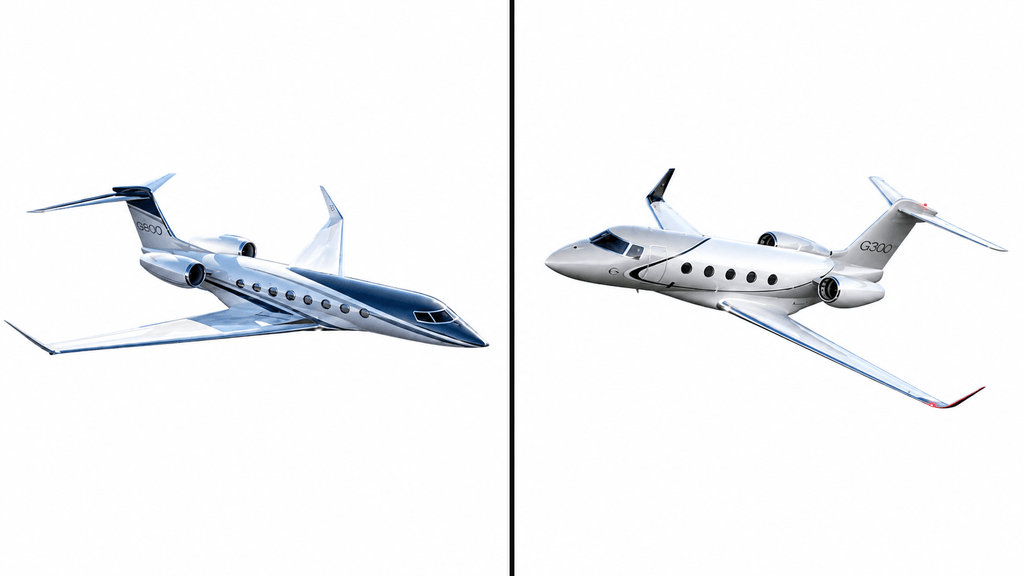
Gulfstream may have one of the deepest aircraft displays at this year’s show. The current NBAA directory lists the G800, G700, G600, G500 and G400, along with a G400 mock-up and a G300 mock-up. That gives Gulfstream the opportunity to show almost its entire current strategy in one place, from the newer super-midsize end of the lineup all the way to its longest-range aircraft.
We have already spent considerable time with the G800 at Elite Ace Aviation in our Gulfstream G800 review. Its 8,200-nautical-mile published range gets most of the attention, but I think one of the more important things to watch at BACE is how Gulfstream positions the airplane now that Bombardier’s Global 8000 is also in service. This is no longer a comparison between specification sheets and future delivery dates.
The G400 and G300 may tell us just as much about Gulfstream’s direction. The G400 gives the company a newer aircraft in a range category that makes sense for a much larger number of real-world missions, while the G300 is intended to modernize Gulfstream’s position farther down the lineup. We recently took a closer look at the aircraft in our Gulfstream G300 review, and seeing the mock-up at NBAA-BACE should provide a better idea of how Gulfstream intends to differentiate it beyond the published numbers.
For Gulfstream, this year’s display is really about the depth of the lineup. The company is no longer asking every buyer to move toward the largest possible cabin or the longest possible range. It is giving buyers more choices based on actual mission requirements, which is probably where this market needed to go.
The Global 8000 and G800 Rivalry Is Finally Real
Bombardier is bringing the Global 8000, Global 6500 and Challenger 3500 to Henderson. The Global 8000 will naturally draw most of the attention because it sits directly across the market from Gulfstream’s G800 and is now in service rather than waiting in the wings.
We covered the aircraft extensively in our Bombardier Global 8000 review, and the numbers explain why the rivalry gets so much attention. Bombardier offers 8,000 nautical miles of published range and a maximum operating speed of Mach 0.95, while the G800 counters with 8,200 nautical miles of maximum published range and a maximum operating speed of Mach 0.935.
Those differences are small enough that choosing between them should never come down to one number. We reached the same conclusion in our Gulfstream G800 vs Bombardier Global 8000 comparison. Cabin layout, runway performance, support, typical mission length, existing fleet relationships and how an owner actually uses the airplane will matter more than bragging rights over 200 nautical miles of range or a few hundredths of Mach.
That is why having both aircraft at the same show matters. Buyers and operators will be able to look at the cabins, cockpits and overall aircraft back-to-back rather than comparing polished manufacturer photographs from opposite sides of the internet.
Dassault Has a Falcon 10X Question Hanging Over the Show
Dassault currently has the Falcon 6X and Falcon 8X listed for the Aircraft Connection. What is more interesting is the aircraft that is not currently on the list: the Falcon 10X.
The 10X finally made its first flight in June, moving one of the most anticipated business jet programs in years into actual flight testing. Dassault is also scheduled to hold a press conference during NBAA-BACE, which makes the program worth watching even if the airplane itself does not appear at Henderson.
As of October 7, NBAA has not listed the Falcon 10X as part of the Aircraft Connection. That could still change because the directory is being updated as additional aircraft are confirmed, but there is no reason for us to pretend it is coming until either NBAA or Dassault says so.
For me, the bigger story may be what Dassault tells us about the test program and certification schedule. The 10X has an enormous cabin and performance targets aimed directly at the top end of the business aviation market, but it has taken a long time to reach flight testing. The next question is how quickly Dassault can turn that flying prototype into a certified customer airplane.
Textron Brings a Very Different Kind of Lineup
Textron Aviation is currently scheduled to bring the Citation CJ3 Gen2, Citation Ascend, Citation Longitude and Citation Latitude. It is not the same kind of display as Gulfstream or Bombardier because Textron is covering a much broader range of missions and price points.
The Ascend is especially interesting because it updates the midsize Citation formula without trying to turn the airplane into something it is not. The CJ3 Gen2 represents the same general philosophy farther down the Citation family, bringing newer cockpit technology and improvements to a platform that already has a large owner and operator base.
What I want to hear in Las Vegas is less about the brochure and more about how these aircraft are actually being used. Once an airplane reaches customer hands, the questions become different. We can start looking at how crews like the cockpit, whether the changes actually reduce workload, how the cabin works on normal trips and where owners are seeing meaningful improvement over the aircraft they replaced.
That is information you rarely get from a launch announcement. It usually starts showing up when pilots, operators and customers have accumulated enough time in the aircraft to tell you what works and what does not.
HondaJet Echelon Remains One to Watch
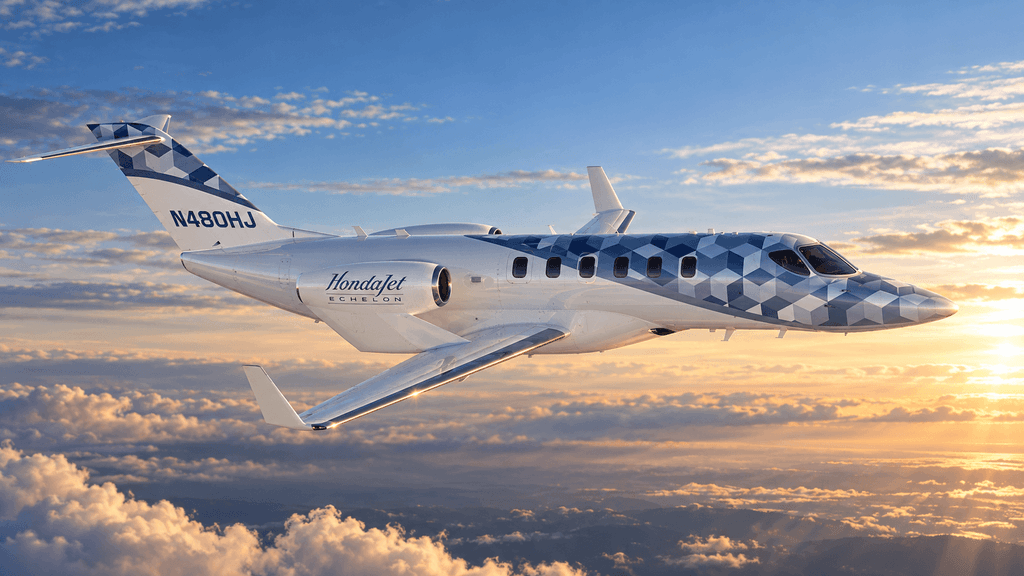
Honda Aircraft currently has the HondaJet Elite II and an APMG aircraft listed at Henderson, but the Echelon is not on the current Aircraft Connection directory. That does not make the Echelon less important, because it remains one of the more interesting new aircraft programs in this part of the business jet market.
We recently went deep into the program in our HondaJet Echelon review. Honda is targeting a 2,625-nautical-mile range, 450-knot maximum cruise speed and single-pilot capability, which would give the airplane an unusual position between traditional light jets and larger midsize aircraft.
The bigger issue today is time. Honda recently pushed the program schedule back, with first flight now targeted for 2028 and certification and first delivery planned for 2031. The company has also said it has more than 500 letters of intent, so there is clearly interest if Honda can deliver an airplane close to the performance and operating targets it has advertised.
That makes the Echelon worth discussing at NBAA-BACE even without an airplane sitting on the ramp. The questions now are about engineering progress, suppliers, schedule and whether Honda can maintain buyer interest during a development program that still has several years to run.
Pilatus Shows Where Single-Pilot Automation Is Going
Pilatus is bringing both the PC-12 PRO and PC-24, and the PC-12 PRO arrives at an interesting point in the development of single-pilot aircraft. Its latest cockpit combines the Garmin G3000 PRIME-based system with digital features including autothrottle technology and the recently certified Safety Autoland capability.
The important part is not Autoland by itself. We are seeing increasingly sophisticated automation move into aircraft that are commonly flown by one pilot, including technology that can reduce workload during normal operations and provide another layer of protection when something goes wrong.
That does not make pilot skill less important. In my view, it makes training and understanding the automation even more important because pilots need to know exactly what the airplane is doing and when to intervene. What is changing is the amount of support available to the person sitting in the left seat.
The PC-24 gives Pilatus another angle at the show because it remains one of the more unusual business jets in the market. Its ability to operate from runways and surfaces that would keep many conventional business jets away continues to give it a mission profile that is difficult to duplicate simply by comparing range and cruise speed.
Electric and Hydrogen Aircraft Need to Be Judged Differently
NBAA is also putting more attention on advanced air mobility this year. Beyond Aero plans to show its six-passenger hydrogen-electric ONE concept, DTA Aircraft is bringing its JP1 hybrid-electric VTOL prototype, and REGENT will showcase its electric Seaglider concept.
These projects deserve coverage, but I think they also deserve some perspective. Business aviation has seen plenty of impressive renderings, mock-ups and revolutionary concepts over the years. Some became real aircraft, while others never made it past the development stage.
That is why DTA’s JP1 catches my attention. NBAA says the prototype has already accumulated more than 200 flight hours, which puts it in a very different category from a design that exists mainly as a model or computer rendering. Flight testing does not guarantee commercial success, but it at least tells us engineers are working through problems with a real aircraft rather than only selling an idea.
The same standard should apply across this entire part of the industry. We should pay attention to the technology, but the milestones that really matter are flight testing, certification, manufacturing capability, infrastructure and eventually reliable operations with paying customers.
The Aircraft Sales Market Could Be One of the Most Important Stories
One part of NBAA-BACE 2026 that may not get as many photographs as the G800 or Global 8000 is the aircraft transaction market. NBAA has expanded its relationship with the International Aircraft Dealers Association, with nearly 50 accredited dealers and certified brokers participating around the show and contributing to sessions covering transactions, pricing, pre-purchase inspections and market conditions.
That comes at a useful time. IADA says its accredited dealers completed 746 preowned business aircraft transactions during the first half of 2026, up 21% from the same period a year earlier. Inventory for desirable aircraft remains relatively tight, while long manufacturer backlogs continue to push some buyers toward late-model preowned airplanes rather than waiting years for a new delivery.
We are paying much more attention to this side of business aviation at Elite Ace Aviation because buying an aircraft is about considerably more than choosing the airplane with the best specifications. Acquisition cost, residual value, maintenance history, availability, financing and how easily an owner can eventually exit the airplane all matter.
The October 21 aircraft-market discussion with brokers could therefore tell us as much about the state of business aviation as anything sitting at Henderson. If inventory begins to loosen while new-aircraft deliveries continue increasing, buyers may finally gain more negotiating room in parts of the market. If inventory remains tight, we could see strong values continue longer than many people expected.
What We Really Want to Learn at NBAA-BACE 2026
There are plenty of aircraft specifications we already know before anyone gets to Las Vegas. We know how far the G800 and Global 8000 are supposed to fly, what Honda wants from the Echelon, and what Gulfstream says its newest aircraft will deliver. Repeating those numbers from the show floor would not tell readers much that they could not find today.
The useful information will come from seeing how these aircraft compare in person and talking with the people building, selling, maintaining and flying them. Which cockpits actually feel better laid out? Which cabins make the best use of their space? What are brokers seeing in the market, and what are operators saying after putting real hours on the newest aircraft?
That is why we are trying to get someone from Elite Ace Aviation on the ground this year. If we can make it happen, I want our coverage focused on those details rather than simply republishing announcements everyone else received in the same email.
NBAA-BACE 2026 should give us a much clearer picture of where business aviation is heading into 2027. The most interesting part will not necessarily be which manufacturer announces the biggest number, but which airplanes, technologies and market trends look like they are actually delivering something useful once the marketing is stripped away.