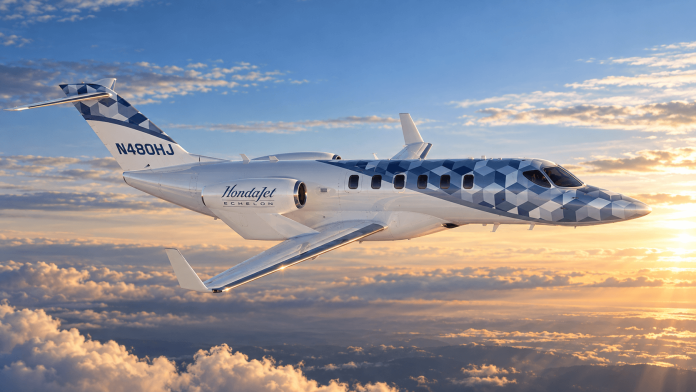
The HondaJet Echelon could end up being one of the most interesting new business jets of the next decade. In this HondaJet Echelon review, we are looking at what Honda Aircraft Company has confirmed so far, including its 2,625-nautical-mile range target, 450-knot maximum cruise speed, larger cabin and planned single-pilot certification. The aircraft is still several years away from entering service, but if Honda gets close to its current targets, the Echelon could fill a unique spot between traditional light jets and larger midsize aircraft.
This is also much more than a stretched version of the HondaJet Elite II. The Echelon is being developed around longer trips, more passengers and considerably more baggage capacity while keeping several of the design ideas that have defined the HondaJet family. Honda’s goal is to give buyers true transcontinental capability without forcing them into a much heavier midsize platform.
What Is the HondaJet Echelon?
The HondaJet Echelon was originally introduced as the HondaJet 2600 Concept before Honda Aircraft announced plans to commercialize the aircraft in 2023. Later that year, the company officially gave it the Echelon name and confirmed it would become the second major aircraft line in the HondaJet family. The Echelon is not designed as a replacement for the smaller Elite II. Instead, it moves Honda into a larger segment of business aviation with seating for as many as 11 occupants, more than double the range of the current HondaJet platform and considerably more cabin and baggage space.
Honda also plans to certify the aircraft for single-pilot operation. That could make the Echelon especially attractive to owner-pilots and operators who want longer range without automatically moving into an aircraft that typically requires a two-person flight crew.
HondaJet Echelon Specifications
Honda Aircraft has released target performance figures while the Echelon remains under development.
| Specification | HondaJet Echelon |
|---|---|
| Maximum cruise speed | 450 KTAS |
| NBAA IFR range | 2,625 nm |
| Maximum cruise altitude | FL470 |
| Takeoff distance | 3,300 ft |
| Landing distance | 2,550 ft |
| Maximum occupancy | 11 |
| Baggage capacity | 120 cu. ft. |
| Length | 57.79 ft |
| Wingspan | 56.72 ft |
| Height | 15.86 ft |
| Cabin length | 25.38 ft |
| Cabin width | 5.08 ft |
| Cabin height | 5.21 ft |
| Maximum takeoff weight | 17,550 lb |
| Engines | Williams International FJ44-4C |
The numbers show why the Echelon is difficult to place into one traditional category. Its 17,550-pound maximum takeoff weight keeps it within the light-jet class, yet its range, baggage capacity and passenger count begin to move into territory buyers often associate with larger aircraft.
It is worth remembering that these are still development targets. The airplane has not entered flight testing yet, so final certified performance could change as Honda works through the test program.
HondaJet Echelon Range
Range is likely to be one of the biggest reasons buyers pay attention to this aircraft. Honda is targeting an NBAA IFR range of 2,625 nautical miles with one pilot and four passengers, which would put many nonstop coast-to-coast trips within reach. That would be a major step beyond the current HondaJet lineup. Rather than being focused mainly on shorter regional business trips, the Echelon is being designed around missions that often require owners to step up into a larger jet.
Real-world range will still depend on passenger load, baggage, winds, weather, fuel reserves and airport conditions. Even so, 2,625 nautical miles is a serious number for an airplane Honda wants certified for single-pilot operation.
Speed and High-Altitude Performance
Honda is targeting a maximum cruise speed of 450 KTAS and a maximum operating altitude of 47,000 feet. Both figures represent a noticeable jump from the current HondaJet platform, which tops out at 422 knots and FL430. Operating as high as FL470 can give pilots more options for getting above weather and finding better winds on longer trips. It also gives the airplane access to airspace above much of the commercial traffic flying in the lower flight levels. The 450-knot target matters just as much as the range number. Once missions stretch beyond four hours, even a modest speed advantage can make a noticeable difference in total trip time.
Williams FJ44-4C Engines
Honda selected the Williams International FJ44-4C for the Echelon instead of the GE Honda HF120 used on the smaller HondaJet. The published specifications list 3,450 pounds of thrust per engine.
The FJ44 family is already well established throughout business aviation and powers several successful light and midsize jets. Using an existing engine family gives Honda a proven platform rather than requiring an all-new engine to be developed alongside the airframe. The engine choice also highlights how different this aircraft is from the Elite II. The Echelon is larger, heavier and designed around a much longer mission, so it needs an engine matched to a different performance envelope.
Inside the HondaJet Echelon Cabin
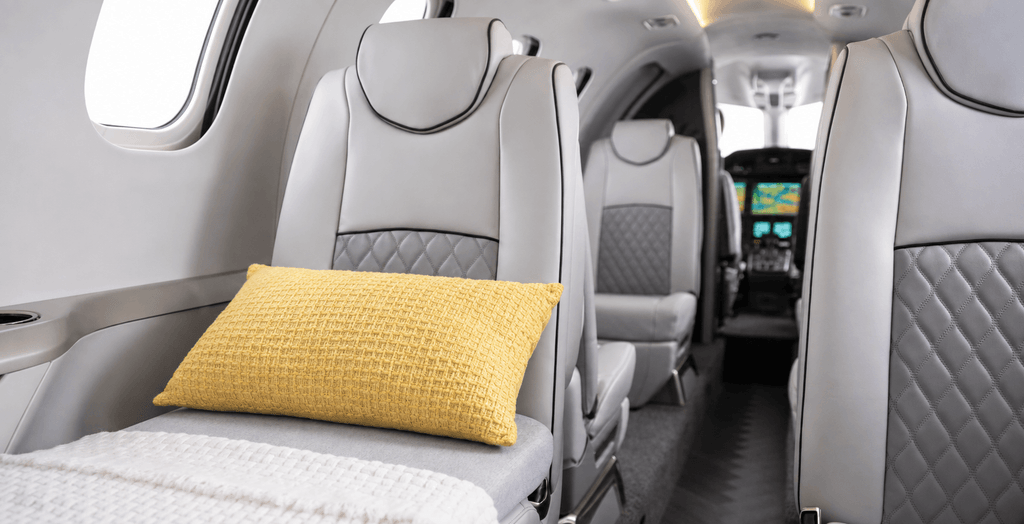
The Echelon cabin is where Honda appears to be making one of its biggest moves beyond the current HondaJet. The planned cabin measures 25.38 feet long, 5.08 feet wide and 5.21 feet high, giving passengers noticeably more room than in the smaller HondaJet family. Honda has shown several interior arrangements, including executive seating, dual-club layouts and configurations using a divan. That should give owners more flexibility depending on whether the aircraft is used primarily for corporate travel, family trips or a mixture of both.
The cabin is not stand-up height for most adults, but the additional space becomes more important on longer flights. Honda is also targeting a cabin altitude of 6,363 feet while the aircraft is flying at FL470, which could help reduce fatigue during longer missions.
Baggage Capacity
The Echelon is planned to offer 120 cubic feet of total baggage space, which is a substantial amount for an aircraft in this weight class. That number becomes more important when you consider the type of missions Honda is designing the airplane to fly.
An aircraft capable of longer trips also needs enough room for passengers to carry luggage for several days rather than just an overnight bag. Owners traveling with golf clubs, business equipment or multiple passengers could find the baggage capacity just as valuable as the extra range. This is one of those specifications that may not get the same attention as speed, but it has a major impact on how useful an airplane is in the real world.
Garmin G3000 Flight Deck and Single-Pilot Capability
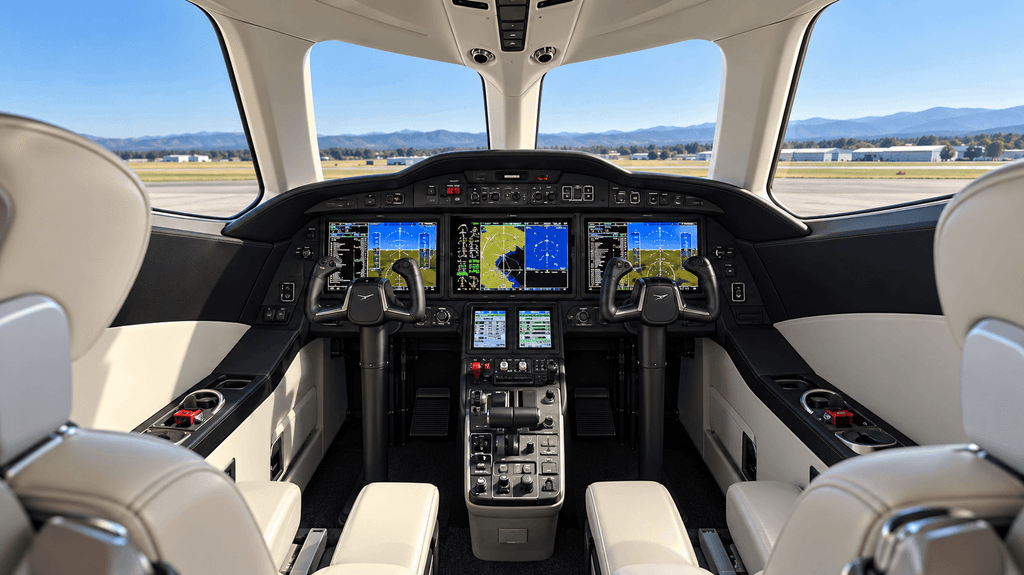
Honda selected the Garmin G3000 avionics platform for the Echelon, continuing its relationship with Garmin. The bigger story is the amount of automation Honda plans to build around that cockpit. The aircraft is expected to include autothrottle, autobrake, Emergency Autoland, runway overrun awareness and alerting, along with Honda’s Advanced Steering Augmentation System. Those systems are designed to reduce workload and add another layer of protection during normal and abnormal operations.
That technology becomes especially important in an aircraft intended for single-pilot use. Flying a long cross-country mission by yourself is very different from making a short regional hop, so workload management will be one of the areas worth watching closely once flight testing begins. Emergency Autoland could be particularly valuable for owner-flown missions. If the pilot becomes incapacitated, the system is designed to take control of the aircraft and complete a landing.
Honda’s Over-the-Wing Engine Design Returns
The Echelon keeps one of the most recognizable features of the HondaJet, its over-the-wing engine mount design. Instead of mounting the engines directly to the rear fuselage, Honda positions them above the wings.
The configuration is not only about appearance. Honda developed the design to reduce aerodynamic interference while opening up more usable space in the rear of the fuselage and helping reduce cabin noise and vibration. Natural laminar flow technology is also being used in parts of the wing and fuselage. Aerodynamic efficiency has been a major part of the HondaJet design philosophy from the beginning, and Honda is carrying that approach into the larger Echelon.
Fuel Efficiency Could Be One of Its Biggest Advantages
Honda says the Echelon is being designed to use up to 20 percent less fuel than typical light jets and more than 40 percent less than midsize jets on a typical mission. Those are ambitious claims, and they will be much easier to judge once the aircraft is flying and operators can compare real-world fuel burn.
Fuel consumption varies considerably depending on altitude, speed, payload, temperature and trip length. Because of that, manufacturer projections should be treated as targets until actual operating data becomes available. Still, efficiency is central to the Echelon concept. Honda is trying to give owners the range of a larger aircraft without bringing along the same fuel burn and operating costs associated with many midsize jets.
Short-Field Performance
Honda is targeting a takeoff distance of approximately 3,300 feet at maximum takeoff weight under standard sea-level conditions. The published landing distance is 2,550 feet. Those numbers could give the Echelon access to airports that larger business jets cannot use as easily. For many owners, that matters almost as much as maximum range because a smaller airport can put passengers much closer to their final destination.
The combination of long range and relatively short runway requirements is one of the more interesting parts of the aircraft’s design. Honda is trying to add capability without giving up one of the main advantages people expect from a light jet.
Where the HondaJet Echelon Fits in the Market
The Echelon does not fit perfectly into one existing category. Its weight and planned single-pilot certification place it in the light-jet class, while its range and passenger capacity begin to overlap with larger aircraft. That could put it on the same shopping list as aircraft such as the Embraer Phenom 300 series, Cessna Citation CJ4 family and Pilatus PC-24. Buyers focused mainly on range could also compare it with aircraft at the lower end of the midsize category.
Each of those airplanes takes a different approach, which is part of what makes the Echelon interesting. It may not need to beat every competitor in every category if it can offer a useful mix of range, operating efficiency, runway performance and owner-pilot capability.
HondaJet Echelon Development Timeline
The Echelon program is taking longer than Honda initially expected. Earlier timelines called for a first flight in 2026 and certification around 2028, but Honda updated the schedule in September 2026. Honda Aircraft has completed the first wing structure for an Echelon test unit, with five wing structures moving through various stages of assembly. Mainline final assembly is currently expected to begin in early 2027.
The company is now targeting first flight in 2028, followed by type certification and the first customer delivery in 2031. With several years of development still ahead, there is plenty of time for specifications and schedules to change before the first production aircraft reaches an owner.
How Much Will the HondaJet Echelon Cost?
Honda Aircraft has not announced a final list price for the Echelon. Until the company releases official pricing, any exact number being circulated online should be treated as an estimate. Price will be especially important because of where Honda is trying to position the airplane. The Echelon has to remain attractive to buyers shopping the upper end of the light-jet market while offering enough additional capability to compete with larger aircraft.
Options, avionics packages and interior configuration will also affect the final purchase price. A clearer picture should emerge as the aircraft gets closer to flight testing and certification.
Is the HondaJet Echelon Worth Watching?
At this stage, the answer comes down to whether Honda can turn the current targets into a certified production aircraft. The Echelon already looks strong on paper, but the real test will come once flight testing begins and the company can start proving its range, runway performance, speed and fuel efficiency.
What makes the aircraft interesting is not just one headline number. It is the combination of long range, high speed, useful baggage capacity, shorter runway performance and planned single-pilot operation in one relatively light aircraft. If Honda delivers most of what it is promising, the Echelon could appeal to owners who want more capability than a traditional light jet without taking on the size and operating costs of a full midsize platform.
HondaJet Echelon Review: Final Thoughts
The HondaJet Echelon is shaping up to be much more than a larger version of the existing HondaJet. Honda is attempting to build an aircraft that keeps the efficiency and owner-pilot appeal of a light jet while adding the range and cabin capability needed for much longer trips. There is still a lot to prove before the first customer airplane arrives. Flight testing, certification, final performance figures and operating costs will ultimately decide how competitive the Echelon really is.
For now, it is one of the more ambitious new business jets under development. We will continue updating this HondaJet Echelon review as the program moves into final assembly, first flight and certification.
Related Reading from Elite Ace Aviation
Embraer Phenom 300EV Review: Has the Best Light Jet Become Even Better?
Cessna Citation CJ4 Gen3 Review: Specs, Cockpit and 2026 Release
Phenom 300EV vs Citation CJ4 Gen3: Which Light Jet Comes Out on Top?