
Buying a used airplane can be one of the most rewarding experiences in aviation, but it can also become an expensive lesson if you don’t know what to look for. Some of the biggest problems have nothing to do with how an airplane flies. They involve incomplete maintenance records, overlooked inspections, hidden financial obligations, and paperwork that can come back to haunt an owner years after the purchase.
Today I want to talk about some of the common issues and mistakes aircraft owners and operators make that can create problems later. The common “gotcha” items, if you will. Whether you’re purchasing your first airplane or have owned one for decades, there are plenty of opportunities to get yourself into trouble.
Aircraft Logbooks: One of the Biggest Ownership Gotchas
The most glaring issues I see, and the greatest opportunity for you to get “got,” are paperwork related. Whether you’re buying another aircraft or maintaining the one you’ve owned for years, the paperwork can become an Achilles heel just waiting to get you. Let’s start with 14 CFR 91.403, which places primary responsibility for maintaining an aircraft in an airworthy condition on its owner or operator. Section 91.407 also establishes the requirements that must be satisfied before operating an aircraft after maintenance, including approval for return to service and the appropriate maintenance records. The responsibility doesn’t simply disappear because you hired a qualified mechanic to perform the work.
As an owner, you need to verify that the proper maintenance entry has been made before flying. Even something as simple as an oil change requires the appropriate documentation. It’s common practice for mechanics to prepare logbook entries as stickers, but the owner still needs to ensure those records are properly retained. It also helps to understand what constitutes a good maintenance entry. When a component is replaced, the documentation should adequately identify the work performed and the applicable parts. Supporting documents, including authorized release certificates when applicable, can establish the traceability of installed equipment. If the work was performed by a certificated repair station, a reference to the work order can also be helpful.
I’m not suggesting that the average aircraft owner should know every technical detail of a properly prepared maintenance entry. But understanding the basics is in your best interest, particularly when the time comes to sell the airplane.
I look at aircraft logbooks all the time for people considering a purchase. When those records are incomplete, inconsistent, or missing important documentation, determining whether the airplane is actually airworthy becomes much more difficult. That isn’t just a potential regulatory problem. It can become a financial problem when a prospective buyer discovers something that should have been addressed years earlier.
Airworthiness Directives and Missing Compliance Records
Just had an annual inspection or a 100-hour inspection? Did you receive an updated Airworthiness Directive compliance status? That’s something every aircraft owner should be familiar with, yet it’s an area where documentation is frequently overlooked. You’ll hear different opinions about how AD compliance should be documented. What matters is that the aircraft’s maintenance records establish the current status of applicable directives, including how compliance was accomplished and when any recurring action is due. These directives can apply to the airframe, engine, propeller, and installed equipment.
Some ADs require a one-time inspection or modification, while others establish recurring inspections or component replacement requirements. When evaluating an aircraft for purchase, you need to know what has already been accomplished and whether another expensive inspection or repair is approaching.
Personally, I won’t seriously consider purchasing an airplane without being able to establish its current AD compliance status. If the records are incomplete, you may have no reliable way of knowing whether the aircraft meets all the applicable requirements. Sorting that out after the purchase can become an expensive proposition.
Engine Condition, Oil Analysis, and Propeller Inspections
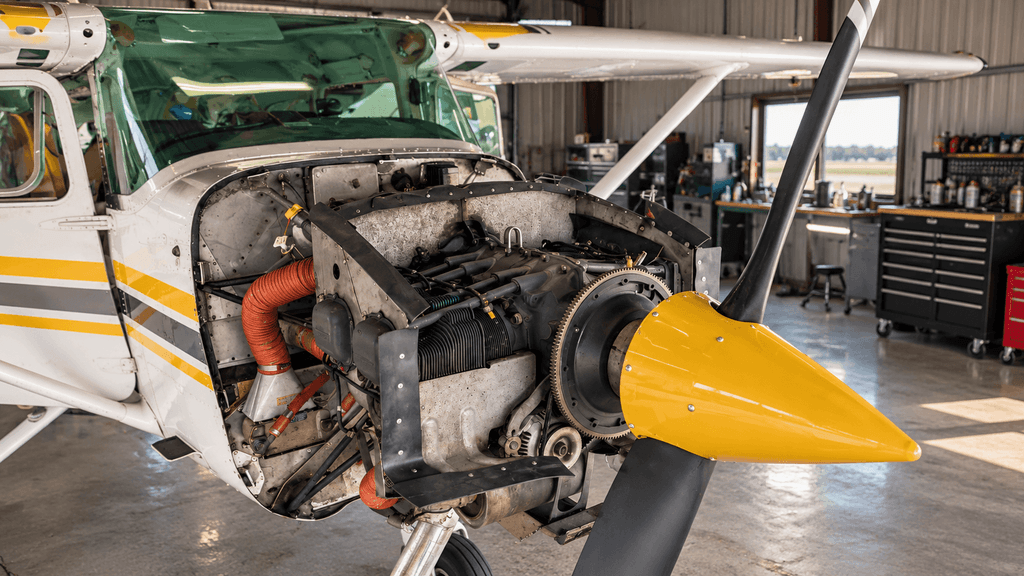
Engine hours are one of the first things prospective buyers ask about, but they don’t tell the whole story. An engine’s maintenance history, operating habits, and overall condition can be just as important as its total time or time since overhaul. One thing I consider particularly valuable is a history of consistent oil analysis. A single oil sample provides limited information, but multiple samples collected over time can help identify developing trends in engine wear. Changes in those trends may point to problems that deserve further investigation before they turn into expensive repairs.
Oil analysis isn’t a substitute for a proper mechanical inspection. It should be considered alongside the engine’s maintenance history, inspection results, and other available information. A consistent record gives a prospective buyer another useful way to evaluate how an engine has been performing. Don’t overlook the propeller, either. Even a fixed-pitch propeller needs to be inspected for cracks, corrosion, damage, and conditions that may require repair or overhaul. Just because it doesn’t have the complexity of a constant-speed propeller doesn’t mean it can’t generate a substantial maintenance bill.
Spinner backplates are another item worth particular attention. They’re notorious for developing cracks, and replacement parts can be surprisingly expensive. Something that looks like a minor discrepancy during a walkaround may turn into a costly replacement once the mechanic takes a closer look.
Aging Aircraft: Understand What You’re Buying
There is plenty of published information available about aging aircraft issues. Read it. Much of the general aviation fleet is now more than 40 years old, and that makes understanding age-related maintenance concerns especially important. An older airplane isn’t necessarily a bad airplane. Some aircraft that have been properly maintained for decades are in excellent condition, while newer airplanes can have serious problems of their own. What matters is knowing where to look and understanding how an aircraft’s operating environment, maintenance history, and previous repairs may affect its condition.
Corrosion, metal fatigue, aging components, and undocumented repairs all deserve attention during a prebuy inspection. An airplane that spent much of its life near saltwater may present different concerns than one that was consistently hangared in a dry climate. The condition of an older aircraft should never be judged by its paint and interior alone. The FAA has published extensive guidance on maintaining aging general aviation aircraft. Spend some time reviewing that information, particularly the areas known to develop structural or corrosion-related problems. A qualified mechanic familiar with the specific make and model should also know where the common trouble spots are.
Flight Manual Supplements and Continued Airworthiness Instructions
What about flight manual supplements? Required supplements are supposed to be available in the aircraft, and many aftermarket equipment installations introduce operating limitations or instructions that must accompany the airplane. That fancy digital instrument cluster? It may require a flight manual supplement. Your GPS navigator, aftermarket fuel tanks, and vortex generators may also have supplemental information that belongs with the aircraft’s approved operating documents.
These items are particularly easy for FAA inspectors to notice because the installed equipment is often right there in the cockpit. If the equipment is visible but its required documentation is missing, you’ve created an unnecessary opportunity for a problem. Another commonly overlooked area involves Instructions for Continued Airworthiness, or ICAs. These can apply to everything from fire extinguishers to modern glass-panel avionics. Some involve relatively simple inspections, while others specify maintenance procedures, battery capacity checks, or additional requirements that must be considered during the aircraft’s ongoing maintenance.
Modern avionics also introduce software compatibility concerns. Primary flight displays, multifunction displays, GPS navigators, and engine monitoring systems often depend on compatible software versions to communicate with other equipment. An incompatible configuration may prevent traffic or weather information from displaying correctly or interfere with communication between the autopilot and navigation instruments.
Not every software update is mandatory, but required maintenance instructions and applicable software requirements shouldn’t be overlooked. They can affect the operation of the installed equipment, and in some cases, failure to follow or document required maintenance can create warranty problems. I experienced that firsthand several years ago when I purchased an aftermarket exhaust system with an optional ceramic coating. The system included an ICA requiring the slip joints to be lubricated with a specific high-temperature anti-seize product. I performed that lubrication religiously but didn’t specifically document the compliance in the maintenance records because I considered it routine lubrication.
When the ceramic coating eventually failed, I requested warranty coverage. The manufacturer refused because the required ICA compliance hadn’t been documented in the annual inspection entry. It cost me approximately $400 to replace a part that I expected would have been covered under warranty. Gotcha.
STCs, Required Placards, and Equipment Documentation
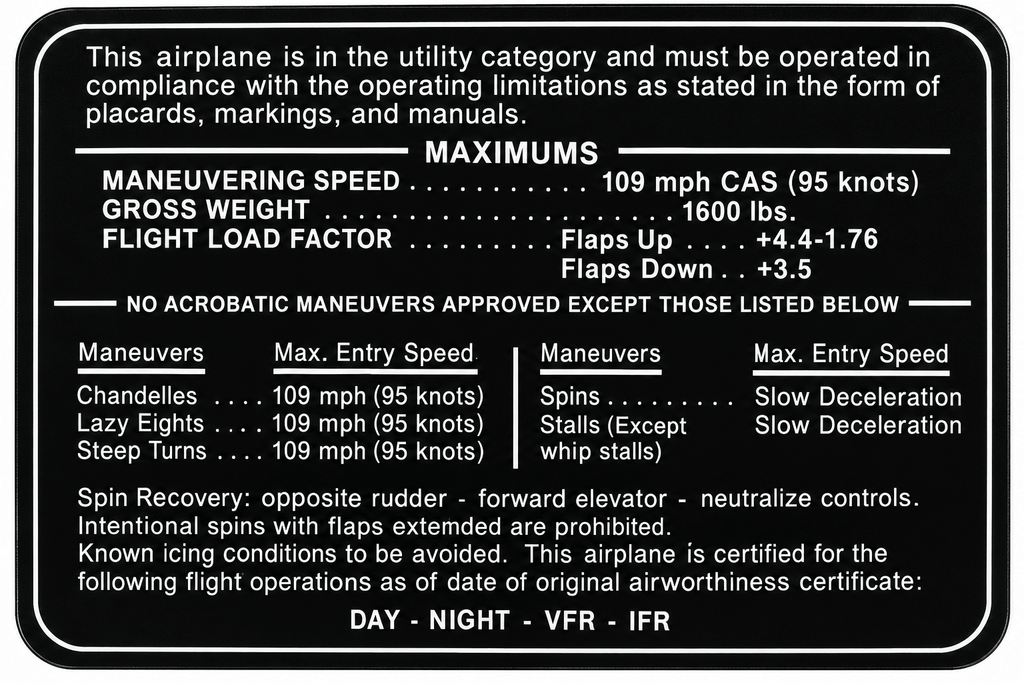
Supplemental Type Certificates and required placards are another easy way to get yourself into trouble, particularly because many of the discrepancies are in plain sight. If a placard is required by the aircraft’s approved flight manual, operating limitations, or an installed modification, it needs to be present and correctly worded. Aftermarket equipment can introduce requirements that owners don’t always recognize. Certain strobe light installations may require cockpit placards describing operating restrictions, while some vortex generator installations have placards identifying how many generators can be missing before the aircraft can no longer be operated within its approved limitations.
I once attended a fly-in where an FAA inspector was walking down the flight line looking into cockpits and checking for required markings. Compass correction cards and fuel quantity or fuel grade placards were among the items attracting attention. These are relatively simple things, yet they can be overlooked even during routine annual inspections.
A missing placard doesn’t necessarily mean the airplane is going to fall out of the sky. However, it can create a regulatory problem, raise questions about the aircraft’s compliance, or complicate an insurance investigation after an incident. There is little reason to expose yourself to those problems over something that should have been identified during maintenance.
Aircraft Title Searches, FAA Records, and Form 337
Before buying a used airplane, spend the money to obtain a proper title search and review the aircraft’s FAA document history. Don’t limit your investigation to the maintenance records the seller provides. There may be important information in the FAA records that deserves a closer look. Pay particular attention to FAA Form 337 records documenting major repairs and alterations. These can reveal previous structural repairs, equipment installations, or modifications that should be compared against the aircraft’s current condition and logbook history.
Finding a major repair in the records doesn’t automatically mean you should walk away from the airplane. What matters is understanding what was repaired, how the work was accomplished, and whether the appropriate documentation exists. An aircraft with properly documented repairs may be a much better purchase than one with an unexplained history.
The title search is equally important. Long-forgotten loans, unreleased security agreements, or other liens can interfere with a sale, and those problems aren’t always obvious from the aircraft’s current registration. A professional title examination should consider applicable legal recording issues rather than relying solely on the FAA database. Even if you’ve owned your airplane for years, I think it’s worth periodically checking its title status. You don’t want to discover an unexpected claim against your aircraft when you’re preparing to sell it. Finding out early gives you a much better opportunity to resolve the problem before it affects a transaction.
Purchase Agreements: Define Airworthiness Before You Buy
A well-written aircraft purchase agreement can prevent a tremendous amount of aggravation. Most good agreements establish how discrepancies discovered during the prebuy inspection will be handled, including which party is responsible for correcting problems before the transaction closes. Generally speaking, many aircraft purchase agreements place responsibility for legitimate airworthiness discrepancies on the seller, while cosmetic issues are left to the buyer. But that isn’t an automatic legal requirement, and you shouldn’t assume your agreement contains those protections unless they’re actually written into the contract.
The term airworthy needs to be clearly defined. The agreement should explain how discrepancies will be evaluated, who determines whether corrective action is required, and what happens when the buyer and seller disagree about an inspection finding. There is a significant difference between faded paint or worn upholstery and a condition that prevents an aircraft from legally returning to service. Both may affect what you’re willing to pay, but they shouldn’t necessarily be treated the same way in the purchase agreement.
These are details that should be resolved before anyone signs the final paperwork. Once the transaction closes, your options for recovering the cost of an unexpected repair may be considerably more limited.
Aircraft Taxes Can Become a Very Expensive Surprise
Every state handles aircraft taxation differently. If you purchase an airplane in one state and fly it home to another, don’t assume you’re automatically exempt from taxes in the state where the transaction occurred. Delivery arrangements, residency, the aircraft’s location, and how long it remains in a particular state can all become important. I heard about a man who purchased an aircraft in Florida and arranged for a local mechanic to perform an annual inspection after closing. The work took a couple of weeks, and when it was finished, he flew the airplane home to South Carolina.
Several months later, he received a bill from Florida for sales tax and another from South Carolina for personal property tax. He had remained in Florida longer than the period specified in his sales agreement for the intended tax treatment. He ended up paying both. Gotcha twice. I experienced a similar situation involving an aircraft purchased from a dealer in Michigan. The airplane was brand new and physically located in Texas. I picked it up in Texas and flew it directly to Florida, and to my knowledge, it never landed in Michigan.
About a year later, Michigan pursued the dealer for sales tax, and the dealer came after me for the money. I refused to pay because I believed the dealer’s tax problem was his responsibility, not mine. The disputed amount was more than $20,000, and after challenging the claim, I prevailed. Tax laws and exemptions vary considerably between states, so the outcome of one transaction doesn’t necessarily establish how another will be treated. Make sure you understand the tax implications before closing, particularly if the aircraft is being purchased across state lines.
ELT Registration: Don’t Forget the Previous Owner
Do you have a 406 MHz emergency locator transmitter installed in your aircraft? If so, have you made sure it’s properly registered with NOAA? These transmitters use a unique identification code that allows search and rescue authorities to identify the registered aircraft and emergency contact information. If you purchase an airplane with an existing ELT, that registration needs to be updated to reflect the new owner.
The same applies when selling an airplane. If you leave your name associated with the transmitter, you may receive a call about an aircraft you no longer own if the ELT activates. That creates unnecessary confusion during a situation when emergency responders need accurate information. If you’ve recently had a new ELT installed, don’t assume the installing facility completed the registration for you. Verify that the information is correct yourself.
International Flying Comes With Additional Gotchas
Want to fly internationally? There are several additional requirements to understand before departing the United States, and some are easy to overlook if you normally fly domestically. Start with your registration markings and aircraft documents. Depending on the operation and destination, larger N-number markings may be required. You may also need an FCC aircraft radio station license and a restricted radiotelephone operator permit.
I’ve carried my radio operator permit since 1982 and have only been asked to present it once. That doesn’t mean you should overlook the requirement when it applies. For international operations involving the United States, there is also eAPIS, the Electronic Advance Passenger Information System. Private aircraft operators generally must submit the required passenger and crew information for both arrivals and departures, but submitting the manifest doesn’t eliminate the other Customs requirements.
When returning to the United States, you must obtain permission to land from the appropriate Customs and Border Protection port before departing the foreign location. CBP also has requirements involving the private aircraft user fee decal, and specific airports may have additional procedures.
Don’t assume that because the information is in a computer, everything has been taken care of. Keep records of your communications and approvals, understand the requirements at your intended port of entry, and verify them before the flight. Failure to comply can result in substantial penalties.
Food and agricultural products are another area where travelers can get themselves into trouble. Even food originally purchased in the United States may be subject to declaration and inspection when brought back into the country. A U.S. grocery store label doesn’t automatically make an item admissible.
International air travel also requires appropriate travel documents, and traveling with children who aren’t your own can introduce additional considerations. Depending on the circumstances and destination, carrying documentation establishing parental consent or legal authority may help avoid unnecessary complications.
I once watched a grandfather get the third degree in Fort Lauderdale after returning from the Bahamas with his grandchildren. The children’s last names were different from his, and their mother wasn’t traveling with them. Fortunately, his daughter lived near the airport and was able to come over and establish the family relationship.
It turned an otherwise routine return home into a very uncomfortable situation. Another entirely avoidable gotcha.
The Real Cost of Aircraft Ownership Goes Beyond the Purchase Price
We all have plenty of money invested in our aircraft, and naturally, we’d like to recover as much of that investment as possible when it’s time to sell. But the value of an airplane isn’t determined by its appearance, avionics, engine hours, or asking price alone. The quality of its maintenance records, previous repairs, compliance history, equipment condition, and outstanding financial obligations can all influence what the airplane is actually worth. Something that appears to be a bargain may become considerably less attractive once those issues are uncovered.
There’s also the possibility of additional complications following an incident or accident. Incomplete maintenance documentation or unresolved airworthiness discrepancies may raise questions during an insurance investigation, depending on the circumstances and policy provisions. That doesn’t mean every paperwork mistake automatically voids coverage, but it certainly doesn’t help your position. A little education and proactive attention can eliminate many of these problems before they develop. Make sure you understand the maintenance records, know what documentation belongs with your airplane, and don’t ignore small discrepancies simply because the aircraft seems to operate normally.
Aircraft ownership can sometimes seem like a contact sport, but most of these gotchas are manageable when you recognize them early. Whether you’re buying a used airplane or maintaining one you’ve owned for years, taking responsibility for the details is one of the best investments you can make. And remember, it’s much easier to identify a problem before the airplane belongs to you than to discover it after you’ve written the check.