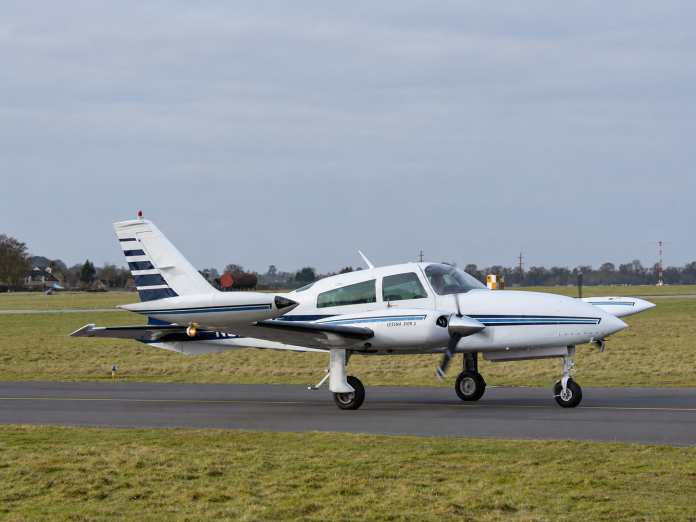
As many of you know, I have been a fan and an owner of Cessna twin engine aircraft for more than 30 years. In that time, I’ve owned a 310, several 414s and a 421. I even had a short stint with a 337 Skymaster. There is little argument that they offer the most “cabin class” for the buck. You can usually buy a nice example for less money than a similarly aged and equipped high-performance single. Why? Because the market for twins is smaller than for singles, and most potential owners look at direct operating cost per hour. Yes, a twin does cost more to operate per hour, though not twice as much as a high-performance single. I will break down the costs for you.
But why would anyone want to own one? What are the pitfalls? The advantages? The statistical realities?
Why Consider a Twin Engine Aircraft?
Let’s start with who. Anyone who routinely flies over inhospitable terrain comes to mind. I for one am much happier flying over water in a twin than in a single. The same holds true for mountainous terrain, where a safe off-field landing is unlikely. What about at night? Or more specifically, IFR at night. Sure you can operate a single over water and mountains, it’s done all the time. But a serious mechanical failure means you MUST make an off-field landing.
Statistics show that most people survive a ditching at sea, or an off-field landing in the mountains, only to succumb to exposure or drown. In a twin engine aircraft, an in-flight engine failure is still an emergency, but you have more options. Those options, not available to the single-engine pilot, are precisely the thing that gets multi-engine pilots in trouble. Consider your mission profile. If you fly for business vs. personal or pleasure use, where trip completion on schedule becomes more important, or if you have the need to fly hard IFR or IFR at night, or if your mission profile finds you wanting to fly four or more large people and stuff on a regular basis, you need to consider a twin.
But if you are feeling the need to go multi-engine, there are several safety realities you want to know about.
Twin Engine Aircraft Safety and Accident Statistics
Where would you expect to find the greatest number of accidents in a twin? As an instructor, I tell my students that the takeoff phase is the most dangerous. Low and slow with the gear down, an engine failure on takeoff would present the most problems to a pilot. But the statistics just don’t support that logic entirely. According to the Nall Report prepared by the AOPA Aviation Safety Foundation, nearly 34% of all accidents in multi-engine aircraft occur in the landing phase of flight, as opposed to just 21% for the takeoff phase.
It is further interesting to note that fully 25% of the fatal accidents in twins occur in the approach phase of flight vs. just 5.4% in the landing phase and 18% in the takeoff phase. So what does that all mean? Well, it basically means that a takeoff accident is most likely going to be fatal while a landing accident is not, but you have a far greater chance of being involved in a landing accident. Also realize that twin engine aircraft comprise less than 8% of the total GA fleet but were involved in 9.4% of the total accidents, and 14% of the fatal accidents.
When and where these aircraft are operated also has an effect on the statistics. People buy twins for their greater weather capabilities. Interestingly though, only 16.2% of the fatal accidents occurred due to weather-related issues in twins vs. 47.2% in retractable singles. So the statistics support the theory that twins are in fact safer in weather than singles. Night also plays a significant role in accidents. According to the report, 6.9% of all accidents occur at night, and 66% of the instrument approach accidents occur at night. Unfortunately, no breakdown of multi- vs. single-engine aircraft is provided. Historically, the fatal accident rate in twins is consistently nearly double the fatal accident rate in singles.
Understanding Engine Failure in a Piston Twin
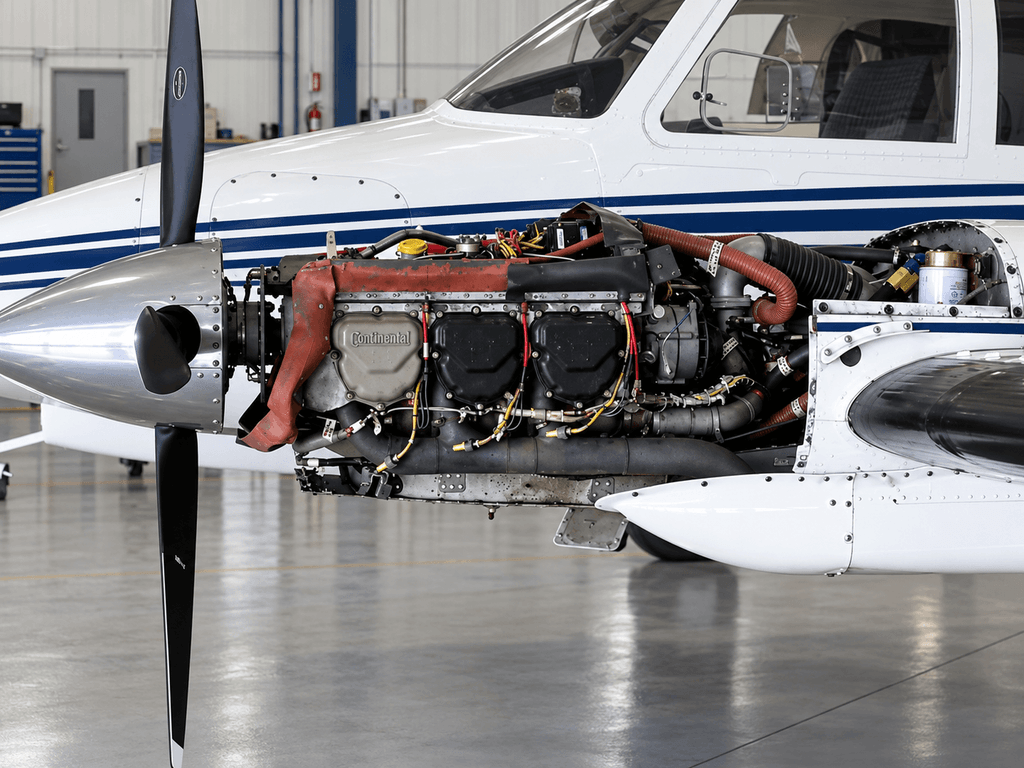
What makes a twin so dangerous? Most twins utilize nacelle-mounted engines on the wings. (We will exclude centerline thrust twins like the Cessna Skymaster for the purposes of this conversation.) This design comes with an inherent flaw, and that is asymmetrical thrust. Counter-rotating propellers reduce the amount of asymmetrical thrust by moving both thrust lines closer to the centerline of the aircraft, thus eliminating the so-called “critical” engine.
Despite what you may have heard, the critical engine is not the engine that is still running after an engine failure. It is the left engine on an airplane with conventional rotating propellers, or the engine which has the thrust line closest to the centerline. When that engine fails, the remaining engine, the engine which the airplane is flying on, has the thrust line farthest from the centerline of the aircraft, thus creating the larger amount of asymmetrical thrust.
That is why you see boom-mounted engines on the tails of jets, because they are so close to the centerline that failure of either engine will not create significant amounts of yaw. In a typical light twin like a Cessna 310, failure of the critical engine will create significant asymmetrical thrust, requiring the pilot to initiate the standard drill for engine failure in a twin. Though there are variations for specific aircraft types, the basic memory item drill Michael describes is as follows:
- Mixtures, Props, Throttles: Full Forward
- Gear up, Flaps up, Boost pumps: As required
- Identify: Dead foot = dead engine
- Verify: Pull throttle back to idle on suspected engine
- Secure: Pull the mixture to idle cutoff on dead engine
- Feather: Feather the prop on dead engine to reduce the yaw
- Then: Go to the checklist
It sounds simple enough and in practice, it happens just about as fast as you can say it. In some situations, like during takeoff, the mixtures, props and throttles are already forward, and the boost pumps should already be on. That leaves the gear and flaps to attend to. Some aircraft take off with partial flaps extended while some do not. That leaves the gear. Almost all light twins climb better with the gear up than with the gear out. When I teach multi-engine departures, I want to see the aircraft’s nosewheel on the ground until Vmc, and rotation at Vmc plus five.
When we establish a positive rate of climb, the gear comes up immediately while simultaneously accelerating to blue line. This narrows the window of time in which an engine failure would make the aircraft uncontrollable (Vmc rollover). By keeping the nosewheel on the ground to Vmc, you ensure that you can maintain directional control until such time that there is sufficient rudder to do the job. By rotating at Vmc plus five, if the engine were to pack it in at the exact instant you rotated, I advocate retarding the power on the good engine and stopping on the runway.
It would be better to run off the end of a too-short runway at 20 knots than to try to fly it off so close to Vmc. Why do I say that? Because if you look at the fatal accidents which occur on takeoff in twins, almost all of them are Vmc rollover accidents. It is obvious that the pilots of these airplanes elected to continue the takeoff even after the engine failed.
Single-Engine Performance in Piston Twins
The bottom line? Multi-engine piston aircraft do not perform well on one engine. When an engine quits on a twin, you don’t lose half the performance, you lose upwards of 80% of its performance. Furthermore, for aircraft with a gross takeoff weight of less than 6,000 lbs, or a stall speed less than 61 knots, there is no certification requirement for these aircraft to climb on one engine under any specific conditions.
When you read single-engine climb figures quoted for specific aircraft, remember that those numbers were achieved by a factory test pilot, in a factory-new aircraft in what should be considered factory test air (59°F, low humidity and 29.92 inches of mercury at sea level). Also remember that the test pilot knows the engine is going to fail and is spring-loaded to respond. When it happens to you for real, there will be several seconds of threat recognition and resolution that will pass before you actually react to the engine failure. If you ever watched the movie Sully, it’s called startle factor. You should be spring-loaded for an engine failure on every takeoff.
Even if you do everything right, you will be rewarded with a climb rate of not more than a few hundred feet per minute, about half of what you might expect from a fully loaded and very tired Cessna 150. The difference is that in the 150, you achieve that rate of climb at a speed of about 68 knots vs. 95 to 120 knots in most light twins. You are covering a lot more ground in the twin.
Below are some published best single-engine rates of climb for popular Cessna twins:
| Model | Published single-engine climb rate |
|---|---|
| Cessna 310R | 370 fpm |
| Cessna 340 | 250 fpm |
| Cessna 402B | 225 fpm |
| Cessna 414 | 240 fpm |
| Cessna 421B | 250 fpm |
As you can see, none of the models offer what could be considered a wide margin of performance. Remember these are the factory numbers. It is doubtful that you could achieve performance this good in a typical 40-year-old example with mid-time engines.
Cessna 310 Operating Costs and Performance
Now let’s look at specific operating costs for the Cessna 310. That model came in several versions starting with the early 240 hp Continental O-470s and ending production with the IO-520. There are also turbo variants which are true speed demons as well as aftermarket conversions that put IO-550s in the airframe. I currently operate one of those.
The 310 features a huge cabin, great range and a wide CG making loading easy. It is often the ride of choice for someone stepping up from a C-182 or C-210. Stable and easy to fly, it sits high off the ground, requiring some gymnastics to get into and out of. Large windows make the cabin un-claustrophobic and later models feature fifth and sixth seats you can actually use. As a general rule of thumb, you can guesstimate the approximate direct operating cost by simply multiplying the cost of fuel times three.
In today’s world of six-dollar-a-gallon avgas, my 550-powered airplane burns 30 gallons an hour, which translates to $540 per hour real cost based on 100 hours of flight time per year. That price includes hangar, insurance, scheduled maintenance and engine and prop reserve. For that, I am rewarded with 1,950 lbs of useful load, 200-knot true airspeeds and 1,500 nm range. That’s a serious capability increase over the average single-engine airplane.
Now nothing says that you have to go as fast as it will fly and burn 30 gallons an hour. You can pull the power back and go a little slower and burn significantly less fuel. My Cessna 310Q, which came with Continental IO-470s, cruised at 180 knots on 22–23 gallons an hour.
Weight, Weather and Takeoff Performance
The secret to safe operations in the Cessna twins (and all piston twins for that matter) is to never fly them at gross weight on a hot day. If you look at the accelerate-go chart for a Cessna 414, for example, on a 90-degree day at gross weight, even at sea level, you are looking at more than 14,000 feet just to clear the imaginary 50-foot obstruction.
That’s nearly 3 miles! But if you reduce the takeoff weight by just 250 lbs, the distance is reduced to around 8,000 feet. That is significant.
Training and Currency for Twin Engine Aircraft
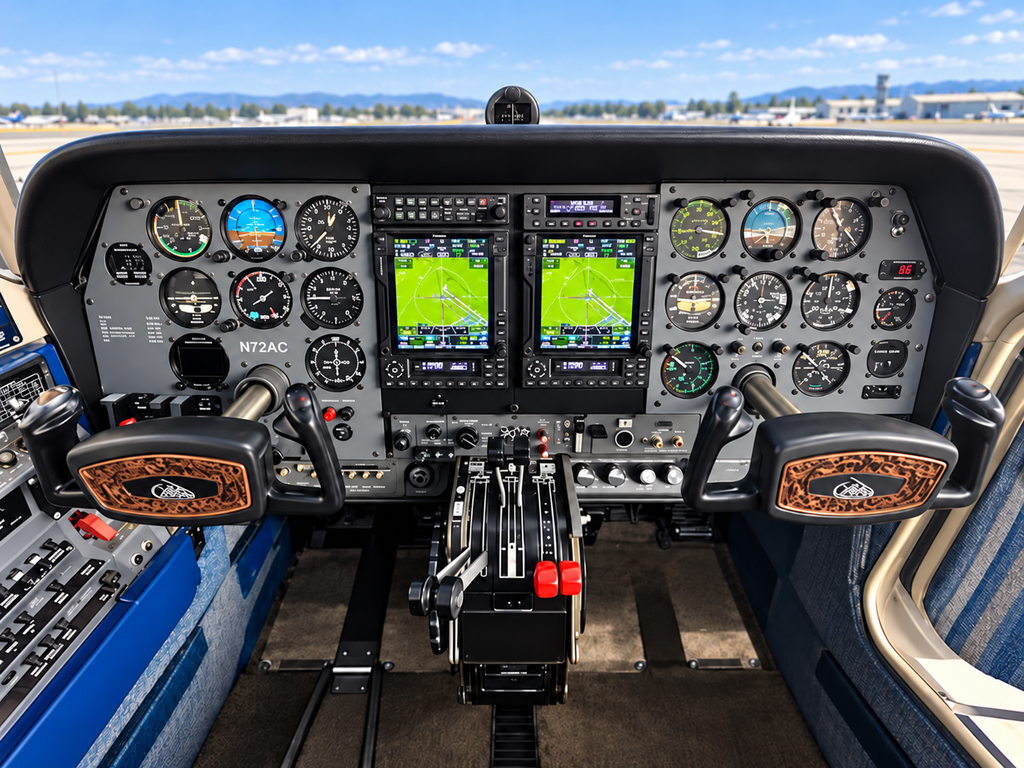
Most insurance companies will require you to get type-specific training for your twin Cessna. The good news is that this type of training is available for most piston twins. There are several schools such as SimCom in Orlando, Florida, FlightSafety and CAE that offer programs for piston twins. While this training isn’t cheap, it clearly improves your chances of successfully surviving a compound failure situation, which could lead to a fatal accident. That being said, I have never seen a simulator that will adequately represent the performance of a piston twin.
Nothing is a complete substitute for time in the aircraft. Go out and find a qualified instructor. If you are unhappy with your first choice, find another. When you do find one you like, hang onto him or her as if your life depended on it, because in a sense, it just might. Confess your weaknesses to them. You know you better than anyone. Then let them take you through situations which will build your experience and confidence in handling the things that make you uncomfortable.
Not comfortable at night? Have them take you flying at night. Not happy in ice? Go with the instructor into a known ice situation (assuming the aircraft is certified and it is all working, of course). Set yourself up on a regular program. Several hours every 90 days, every six months, whatever it takes.
I’m a CFI, MEI and ATP, and I fly five hundred plus hours a year, much of it IFR. Yet I still take an IPC every six months even though I have met and exceeded the minimum requirement for currency by a long shot. The point is that it takes a larger commitment to training and currency in a twin than in a single, and if you wish to operate safely, you need to be realistic about your ability to meet that commitment.
Don’t kid yourself! The statistics don’t lie!
Are Twin Engine Aircraft Worth the Cost?
If you ask me if all the effort and expense is worth it, I am going to say yes. To obtain the kind of performance and capability you get from the 300 and 400 series Cessna twins from any single-engine aircraft is unlikely. At night? In the weather? With my family on board? I can’t put a price on that peace of mind. I just completed a purchase for a client of a Cessna 310 with the Bearcat conversion on it (Continental 550s).
Loaded with a glass panel full of radios, radar and a modern autopilot, this baby cruises at just over 200 knots at 8,000 feet. The new owner paid one hundred and sixty-seven thousand dollars for that plane. That’s not a typo. There is tremendous value in the Cessna twins if you are willing to do the extra work to fly them. I have kept copious notes and spreadsheets on the operating costs for all these planes. I can be very specific if you are interested in having that conversation.
Related Pilot Resources & Aircraft
Explore more aviation safety insights, aircraft performance resources, and aircraft listings.