
The FAA is ending Citation single-pilot exemptions that have allowed qualified pilots to fly certain legacy Cessna Citation jets without a second pilot for more than 40 years. The change affects several CE-500-series aircraft originally certified for two-pilot operations, including the Citation I, Citation II, Citation V, Ultra, Bravo and Encore. It does not mean every Citation can no longer be flown by one pilot.
The policy was published in the Federal Register on September 28, 2026, and became effective the same day. The FAA will no longer issue these exemptions to training providers and says existing exemptions will be rescinded through separate actions. Once that relief is terminated, pilots who relied on endorsements issued under those exemptions must operate the affected aircraft with a qualified pilot in command and second in command.
For owners and pilots of older Citations, this is a major operational change. It could mean adding another qualified crewmember to flights that, until now, could legally be conducted by one properly trained and endorsed pilot.
Which Citation models are affected?
The FAA’s action applies to transport-category CE-500 variants that require two pilots under their certification and operating limitations.
The models listed by the FAA are:
- Model 500 Citation and Citation I
- Model 550 Citation II
- Model S550 Citation S/II
- Model 552, Navy T-47A
- Model 560 Citation V
- Model 560 Citation Ultra
- Model 550 Citation Bravo
- Model 560 Citation Encore
- Model 560 Citation Encore+
The FAA lists each of these aircraft as requiring two pilots. The single-pilot exemption program provided regulatory relief that allowed properly trained pilots to operate them alone after completing the required training, checking and logbook endorsement process. That exemption pathway is what the agency is now eliminating.
This is not a ban on every single-pilot Citation
One of the most important parts of the FAA decision is what it does not cover. The Citation Mustang and CitationJet family are not losing factory-approved single-pilot capability because of this policy. Those aircraft were certificated differently and do not depend on the CE-500 exemption system being discontinued.
The older CE-501 and CE-551 variants are also treated differently. According to the FAA, those Part 23 aircraft may be operated without an SIC when they have the additional equipment specified in the limitations section of the FAA-approved Aircraft Flight Manual. The affected CE-500, CE-550 and CE-560 variants were certificated under Part 25 and require two pilots unless regulatory relief applies. That distinction is important for anyone shopping for, owning or operating an older Citation. Two aircraft that appear closely related can have very different crew requirements depending on the exact model and certification basis.
Why is the FAA ending Citation single-pilot exemptions?
The decision is the result of a review that started well before the December 2025 crash involving former NASCAR driver Greg Biffle. According to the FAA, the agency began an in-depth compliance review in 2024 after discovering that some organizations without exemptions were providing training under exemptions held by other entities. Investigators later found problems that included incomplete records, required flight training being conducted in advanced aviation training devices when the exemption did not allow it, and improper checks performed by designated pilot examiners. Some of those cases involved falsified records.
The review had significant consequences. The FAA says 13 of the 14 Part 61 exemption holders were either denied extensions or had their exemptions rescinded because they failed to respond to information requests or failed to comply with the conditions of their exemptions. In cases involving falsified records, the agency also terminated the authority of certain designated pilot examiners. Training oversight, however, was only part of the FAA’s case.
FAA cites higher accident rate for single-pilot legacy Citations
The agency also reviewed 18 years of accident data involving the CE-500 family. According to the FAA, Part 25 CE-500 aircraft flown by a single pilot were involved in accidents at approximately twice the rate of Part 23 CE-500, Model 510 and Model 525 aircraft operating single-pilot. There is an important qualification to that statistic. The FAA’s footnote says the rate was calculated based on the total number of aircraft, rather than a measure such as flight hours or departures. NBAA and the Citation Jet Pilots Owner Pilot Association are asking the agency to release more of the underlying analysis so the industry can better evaluate the comparison.
From the FAA’s perspective, the accident analysis undermines a basic requirement for continuing the exemptions: the agency must be able to determine that the relief provides an equivalent level of safety or does not adversely affect safety.
Did the Greg Biffle crash cause the FAA decision?
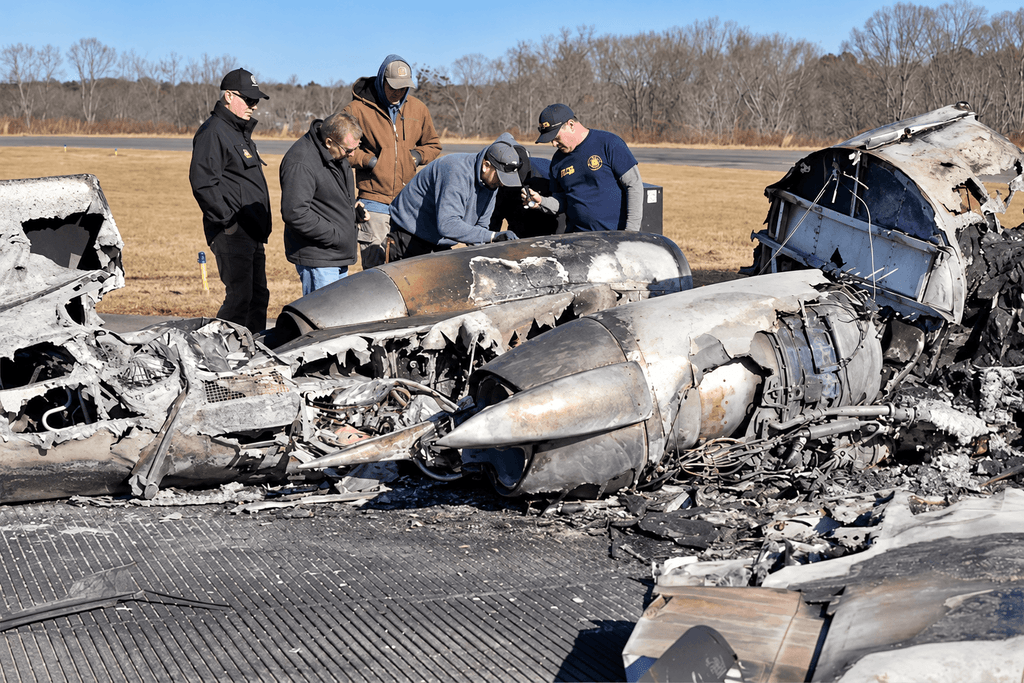
The short answer is no, at least not by itself. The FAA’s review began in 2024, more than a year before the December 18, 2025, Citation crash in Statesville, North Carolina, that killed Greg Biffle and six other people. The agency had already begun examining compliance with the exemption program and later expanded that review to include accident data and broader oversight concerns. However, the Biffle crash is specifically mentioned in the FAA’s explanation for ending the exemption program.
The aircraft involved was a Cessna Citation 550, registration N257BW. According to the NTSB preliminary report, an airline transport-rated pilot was seated in the left seat. His adult son, who held a private pilot certificate with single-engine land and instrument ratings, was seated in the right seat. The FAA states in its policy notice that the aircraft required two pilots and was being operated without a qualified second in command aboard.
That does not establish that the crew arrangement caused the crash. The NTSB investigation remains ongoing, and the agency has not issued a probable cause or determined what role, if any, the lack of a qualified SIC played in the accident. The FAA itself acknowledges in the policy notice that the Statesville investigation is not complete. So the most accurate way to describe the connection is that the Biffle accident became part of the FAA’s broader safety case, but it did not start the review and has not been determined to have been caused by single-pilot operation.
The FAA also cites the 2025 San Diego Citation crash
Another fatal accident cited by the FAA occurred on May 22, 2025, when a CE-500-series Citation crashed in San Diego. Six people aboard the aircraft were killed, while eight people on the ground were injured. The FAA says the pilot had received an improper check approximately six months before the accident from a designated pilot examiner employed by a Part 61 exemption holder. That makes the accident particularly relevant to the agency’s concerns about how the exemption training and checking system was being administered.
The FAA is careful not to claim that the improper check caused the crash. The accident remains under investigation, and no probable cause has been issued. Taken together, the compliance problems, the FAA’s accident-rate analysis, the San Diego crash and the Statesville crash led the agency to conclude that the existing exemption system no longer provided an equivalent level of safety.
Why did these Citations need an exemption in the first place?
The unusual regulatory situation dates back to the 1980s. Certain aircraft within the Citation family were certificated under different standards even though they shared similar designs and operating characteristics. The CE-501 and CE-551 were certificated under Part 23, while the CE-500, CE-550 and CE-560 variants covered by the current action were certificated under Part 25 and required a two-pilot crew.
The FAA issued the first CE-500 single-pilot exemption to Cessna Aircraft Company in 1984. At the time, the agency said there was no data specifically showing a degradation in safety between single-pilot operations in Part 23 CE-500 aircraft and two-pilot operations in the Part 25 versions. The FAA also believed the exemption could provide operators with more flexibility while allowing the agency to gather additional operating data.
Over time, training providers operating under Parts 61, 141 and 142 received exemptions that allowed them to train and check pilots and issue the logbook endorsements necessary for single-pilot operation of the affected aircraft. The FAA now considers that structure difficult to oversee because the training provider holding the exemption may have no continuing relationship with the pilot after the endorsement is issued. A pilot could therefore continue exercising the relief without immediately knowing that the training provider’s exemption had expired or been rescinded.
NBAA and Citation Jet Pilots question the FAA’s approach
NBAA and the Citation Jet Pilots Owner Pilot Association are not disputing the FAA’s authority to respond to legitimate safety concerns. They are, however, questioning the rapid implementation of the decision and asking to see more of the data used to justify it. NBAA said that rescinding the exemptions without direct notice to affected operators raises serious questions. CJP CEO Rob Balzano said the organization filed Freedom of Information Act requests seeking the accident data and analysis behind the FAA’s decision.
The groups are asking the FAA to release its supporting safety analysis, explain the reasoning behind the immediate implementation and work with the Citation community on a transition plan. Their concern has practical consequences. An owner-pilot who has legally operated an affected Citation alone for years may now need to find, schedule and pay a qualified SIC before continuing to fly the aircraft.
What Citation owners and pilots should verify now
The first thing owners should confirm is the exact Citation model they operate. Broad statements that “Citations can no longer be flown single-pilot” are inaccurate because several Citation models retain their normal single-pilot certification. Owners of affected Model 500, 550, S550 and 560 aircraft should determine whether their authority to operate single-pilot depended on one of the exemptions being rescinded. Once the underlying exemption relief ends, the FAA says the logbook endorsement no longer provides authority to operate the aircraft alone.
Operators should also verify that anyone occupying the SIC position meets the applicable regulatory requirements. Simply having another person with a pilot certificate sitting in the right seat does not automatically make that person a qualified second in command. There is some good news for pilots who recently completed recurrent training. The FAA says a Section 61.58 proficiency check completed while complying with the conditions of the exemption can still be used to satisfy the PIC proficiency requirements for two-pilot operation of a CE-500 model.
What this could mean for legacy Citation ownership
The immediate effect is operational, but the change could eventually influence the market for older Citations as well. Single-pilot capability has been a significant advantage for some owner-pilots because it removes the cost and scheduling complications of carrying a second qualified crewmember. Losing that flexibility changes the operating equation for the affected Citation I, II, V, Ultra, Bravo and Encore variants. It may also make the distinction between these airplanes and factory-approved single-pilot models more important to buyers. Aircraft such as the Citation Mustang and CitationJet family remain in a different regulatory category, while properly equipped CE-501 and CE-551 aircraft are not affected in the same way.
Whether that translates into measurable changes in aircraft values will take time to determine. For now, the immediate concern is much simpler: owners need to know exactly which Citation they operate, what its type certificate requires and whether their previous single-pilot authority depended on an exemption that is being terminated. The FAA has not ended single-pilot Citation flying. It has ended a more than 40-year regulatory pathway that allowed a specific group of Citations certified for two pilots to be flown by one.
For affected owners and pilots, that distinction makes all the difference.
FAQ
Yes, depending on the model. The FAA action applies to certain legacy CE-500-series Citations that were originally certified for two pilots and relied on exemptions for single-pilot operation. Factory-approved single-pilot Citations such as the Mustang and CitationJet family are not affected in the same way.
The affected list includes the Citation I, Citation II, Citation S/II, Citation V, Ultra, Bravo, Encore and Encore+ variants that fall under the two-pilot CE-500-series certification requirements.
Not by itself. The FAA’s review began in 2024, before the December 2025 Statesville crash. The agency did cite that accident, along with other safety data and compliance problems, as part of its broader reasoning.
Owners should verify their exact model, type certificate and operating limitations, and determine whether their previous single-pilot authority depended on an exemption that is being rescinded. If it did, they may need a properly qualified second in command.
Related Reading from Elite Ace Aviation
Phenom 300EV vs Citation CJ4 Gen2: Which Light Jet Comes Out Ahead?
A closer look at two modern single-pilot light jets and how their cockpit technology, performance and operating capabilities compare.
Embraer Phenom 300EV Review: Range, Cockpit and Upgrades
Our detailed look at one of the newest single-pilot business jets, including its avionics, safety systems and operating capabilities.
Bombardier Global 8000 Review: Range, Speed, Cabin and Price
See how operating requirements change at the opposite end of business aviation with Bombardier’s two-pilot ultra-long-range flagship.
Official Sources and Further Reading
FAA Federal Register Notice on CE-500 Single-Pilot Exemptions
The FAA’s full explanation of the policy change, affected aircraft, compliance findings and accident data.
NBAA and Citation Jet Pilots Response to the FAA Decision
NBAA and CJP outline their concerns about implementation and their request for the FAA’s supporting safety analysis.