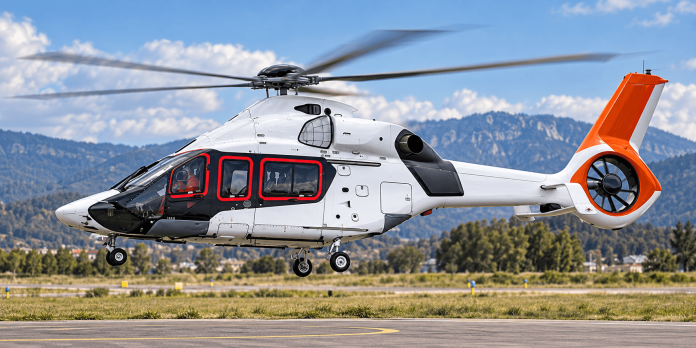
The FAA is proposing new maintenance requirements for Airbus H160 helicopters after investigators found that fire-retardant residue could prevent an emergency exit window from being released. The Airbus H160 safety directive, scheduled for publication in the Federal Register on October 13, follows a reported failure of the helicopter’s window jettison mechanism. The proposal comes just days after European regulators issued a separate directive addressing another problem with the H160’s emergency window system.
Both actions involve the helicopter’s jettisonable windows, although the problems behind them are different. One involves contamination of the release mechanism, while the other concerns the operation of the window locking system.
Fire-Retardant Residue Found in Window Release Mechanism
The FAA’s proposed rule stems from a reported incident in which an H160 window could not be jettisoned. During the subsequent investigation, Airbus Helicopters discovered white particles on a rope used to operate the release system. Investigators identified the particles as fire-retardant residue. The material prevented the rope from sliding as designed, effectively blocking the mechanism used to release the window.
The FAA warns that an obstruction of this kind could prevent occupants from using the affected window during an emergency evacuation. The agency has not identified a specific accident or injury associated with the reported failure in its proposal. EASA addressed the issue in June 2026 through Airworthiness Directive 2026-0116, which established cleaning and testing requirements for affected helicopters. The FAA is now proposing to adopt those requirements for the U.S. fleet, with several modifications.
FAA Proposes Cleaning and Testing Requirements
The proposed directive calls for removal of affected jettisonable windows, cleaning of the release-system ropes, reinstallation, and operational testing. Any discrepancies discovered during testing would have to be corrected using an approved method before the helicopter could return to flight.
The FAA estimates that 17 H160-B helicopters on the U.S. registry would be affected. Based on its cost analysis, the scheduled cleaning and testing work would amount to approximately $2,859 per helicopter, not including additional repairs that might be necessary. Although the proposal covers all H160-B helicopters, the underlying European requirements distinguish between aircraft equipped with affected components and those that are not.
The proposed rule is open for public comment through November 27, 2026. Until the FAA issues a final directive, the proposal itself does not create a new mandatory U.S. maintenance requirement.
EASA Orders Additional H160 Window Modifications
The latest FAA proposal follows another regulatory development involving the H160’s emergency windows. On October 9, EASA issued Airworthiness Directive 2026-0193, covering the lubrication, operational testing, and modification of the helicopter’s jettisonable window mechanism. The directive supersedes an earlier requirement from January 2025 and incorporates an improved mechanism developed by Airbus Helicopters.
The directive takes effect October 23, with the modification required within 12 months of that date. Once the improved mechanism has been installed, operators can discontinue the repetitive lubrication and testing specified in the directive, provided the applicable conditions have been met. This is a separate issue from the fire-retardant residue identified in the FAA proposal. The October EASA directive addresses the operation of the window locking mechanism, rather than contamination of the release ropes.
What the Airbus H160 Safety Directive Means for Operators
The two regulatory actions place different maintenance requirements on the same helicopter model. For U.S. operators, the FAA proposal concerns cleaning and testing the emergency window-release ropes. The newer EASA directive introduces a modification to the locking mechanism for aircraft within its scope. Airbus has issued service instructions covering both issues, including Alert Service Bulletin H160-52-20-0004 for the rope-cleaning procedures and H160-52-20-0003 for the improved window mechanism.
The timing puts the H160’s emergency window systems under renewed regulatory attention. EASA’s June directive addressed a reported failure caused by residue on the release rope, while its October action continues work on a separate problem involving the window mechanism. The FAA’s comment period runs through November 27. For operators and maintenance providers, the next step is to review the applicable directives and Airbus service instructions against the configuration and regulatory status of each aircraft.
Related Aviation News & Resources
Additional aviation safety coverage and official regulatory documents.