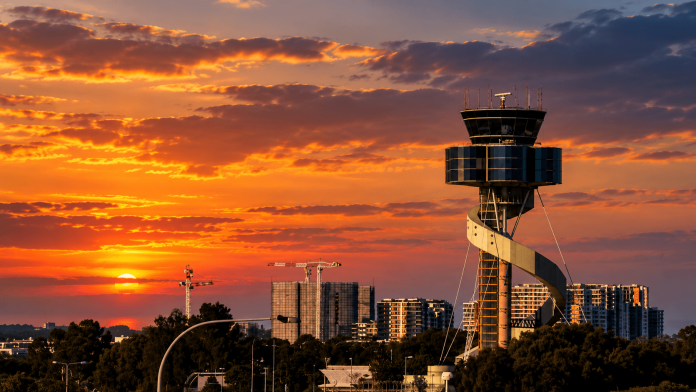
Sydney Airport near misses have prompted six separate safety investigations after a series of aircraft conflicts involving major airlines during July and August 2026. The Australian Transport Safety Bureau (ATSB) released its final two preliminary reports on October 26, adding new details about air traffic control instructions, aircraft movements and the working conditions inside Sydney’s control tower. One of the earlier incidents was serious enough to receive a Category A classification, reserved for runway incursions in which a collision is narrowly avoided.
The investigations come as American aviation authorities continue addressing similar problems at some of the country’s busiest airports. Serious incidents in Austin, Boston and San Diego have shown how incorrect clearances, missed instructions and failures in airport monitoring can bring aircraft dangerously close together. Those cases offer a useful comparison as Australian investigators examine whether Sydney’s recent problems share any underlying causes.
Six Aircraft Conflicts in One Month at Sydney Airport
The six investigations cover incidents between July 27 and August 25, 2026, involving aircraft operated by Qantas, Virgin Australia, Jetstar, Qatar Airways and QantasLink. Some occurred on active runways, while others involved aircraft taxiing or moving away from terminal gates. Although all six created situations requiring attention, their severity varied considerably.
The most serious occurred July 27, when a Qantas Boeing 737-800 was cleared to cross a runway while a QantasLink Dash 8 was completing its landing roll. The aircraft stopped approximately 120 meters, or 394 feet, apart after a breakdown in air traffic control coordination. Investigators classified the event as a Category A runway incursion, Sydney Airport’s first recorded incident in that category since severity classifications began in 2003.
Two more incidents occurred on August 9. In the first, a Jetstar Airbus A320 braked sharply while taxiing to avoid a Qatar Airways Boeing 777 being towed across its path. A flight attendant aboard the Jetstar aircraft fell during the maneuver and suffered a fractured wrist. Later that day, a Qantas Boeing 737 was cleared to cross a runway in front of a Virgin Australia 737 that had already received takeoff clearance. The Virgin crew rejected its takeoff after recognizing the conflict. On August 18, another Qantas aircraft, an Airbus A321, had to brake while taxiing to allow a Boeing 737 to pass.
What the Newly Released Reports Reveal
The two preliminary reports published October 26 describe incidents involving Virgin Australia, Jetstar and QantasLink aircraft. On August 17, a Virgin Australia Boeing 737 crew received instructions to follow a Qantas 737 while taxiing. The Virgin pilots did not fully repeat the instruction, and the controller failed to recognize that part of the clearance had been omitted. The Qantas crew stopped their aircraft as the Virgin jet passed ahead.
Eight days later, a controller cleared a Jetstar Airbus A320 to push back from its gate. Approximately 30 seconds afterward, the controller authorized a QantasLink Dash 8 to taxi through the same area. The Dash 8 crew recognized the developing conflict and stopped, while ground personnel halted the Jetstar pushback. Neither incident resulted in a collision, but both involved situations in which aircraft movements were not properly coordinated. Investigators are examining the instructions issued, how the crews responded and whether existing procedures provided sufficient protection against conflicting clearances.
Air Traffic Control Staffing and Fatigue Under Investigation
Beyond the individual incidents, the ATSB is examining staffing arrangements and working conditions at Sydney’s air traffic control tower. Preliminary reports describe combined controller positions, overtime and predicted fatigue risks during some of the occurrences. Investigators are reviewing those circumstances alongside recordings, operational procedures and controller interviews.
During the July 27 runway incursion, Airservices Australia’s scheduling model identified elevated predicted fatigue risk for four controllers working in the tower. Several controllers subsequently reported feeling alert, and the preliminary findings do not establish that fatigue contributed to the incident. The distinction matters because a scheduling model identifies potential risk rather than measuring an individual’s actual level of fatigue.
Investigators are also reviewing a controller handover that took place shortly before the July runway conflict. The preliminary report indicates that the aircraft had not crossed the threshold required to trigger an automated surveillance warning. Whether different procedures or monitoring arrangements could have prevented the situation remains part of the investigation.
Sydney’s Ground-Conflict Numbers Are Drawing Attention
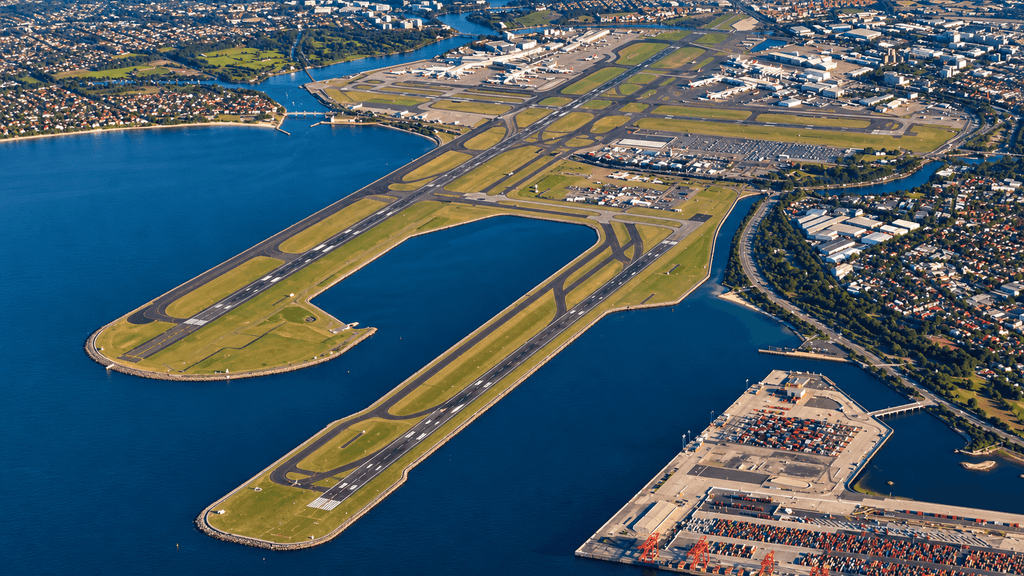
The six investigations are not the only aircraft movement conflicts recorded at Sydney during the period. The ATSB identified 11 reported ground-conflict occurrences across July and August 2026, although only six became the subject of the individual investigations discussed here. The remaining occurrences should not be interpreted as additional near-collisions without examining their circumstances. A separate ATSB statistical analysis examined 599 reported ground-conflict occurrences across Australia’s five busiest airports between 2016 and August 2026. Those airports handled approximately 9.93 million aircraft movements during the period, producing an average of 6.05 occurrences per 100,000 movements.
Following the COVID-19 downturn, Sydney recorded approximately 6.7 ground conflicts per 100,000 aircraft movements, around 20% above the five-airport average. The ATSB acknowledged Sydney’s operational complexity when presenting those figures, but the increase gives investigators reason to examine whether local procedures or working conditions require changes.
Similar Incidents at U.S. Airports Have Led to Safety Investigations
Several American airports have experienced serious runway conflicts in recent years, including incidents involving aircraft cleared to use the same runway at nearly the same time. The National Transportation Safety Board (NTSB) has investigated these events individually, with findings that highlight different weaknesses in the systems intended to prevent collisions. One of the most concerning occurred at Austin-Bergstrom International Airport on February 4, 2023. A Southwest Airlines Boeing 737 was beginning its takeoff roll in dense fog while a FedEx Boeing 767 approached the same runway to land. The aircraft came within approximately 150 to 170 feet of each other before the FedEx crew initiated a go-around.
The NTSB determined that incorrect assumptions by the controller and the absence of effective surface-surveillance technology contributed to the incident. Dense fog prevented the controller from visually monitoring the aircraft, and the tower lacked equipment capable of providing an adequate warning about the conflict. The Austin investigation resulted in safety recommendations aimed at improving runway monitoring and preventing similar situations. It also demonstrated how dangerous an incorrect clearance can become when controllers cannot independently verify aircraft positions.
Boston Logan’s Close Call Involved a Different Failure
On February 27, 2023, a Learjet 60 began taking off at Boston Logan International Airport without authorization while a JetBlue Embraer 190 approached an intersecting runway. The JetBlue crew initiated a go-around, avoiding a collision. The NTSB investigation found that the Learjet crew proceeded despite instructions to wait for clearance. Unlike the Austin incident, where the controller’s decisions were central to the investigation, Boston involved pilots failing to comply with an air traffic control instruction.
The distinction is important because not every runway incursion can be prevented through the same measures. Some require improvements in controller procedures or monitoring equipment, while others involve flight crew training, cockpit decision-making and adherence to clearances.
San Diego Showed the Value of Automated Warnings
Another serious incident occurred at San Diego International Airport in August 2023, involving a Southwest Airlines aircraft and an approaching business jet. An air traffic control error created a conflict between the two aircraft, but an automated surveillance warning helped controllers recognize the danger before a collision occurred. The NTSB subsequently identified controller distraction and inadequate supervision as contributing factors. One controller was handling an unrelated operational issue, while a supervisor’s attention had shifted toward an equipment problem.
San Diego provides a particularly relevant comparison because the airport’s warning technology served as an additional safeguard when normal monitoring failed. Sydney investigators are examining the operation of similar safety defenses, including why a warning was not generated during the July 27 runway incursion.
How Often Do Runway Incursions Happen in the United States?
FAA statistics show that runway incursions remain a recurring issue at major American airports. During fiscal year 2024, the country’s 30 busiest airports recorded 345 runway incursions, compared with 362 during fiscal year 2023. Dallas/Fort Worth, Boston Logan and Chicago O’Hare were among the airports with the highest reported totals. Most runway incursions are not near-collisions. The FAA includes a range of events, from unauthorized runway entries that create little immediate danger to serious conflicts requiring evasive action. Category A and B incidents represent the more severe classifications.
The American totals also cannot be directly compared with Sydney’s 11 ground-conflict occurrences. Australia’s figures include certain taxiway and ground-movement events, while the FAA’s runway-incursion statistics focus on protected runway areas. Traffic levels and reporting definitions must also be considered when comparing individual airports.
What Has the FAA Done About Runway Safety?
Following a series of serious close calls, the FAA announced an audit of runway-incursion risks at 45 major U.S. airports in October 2024. The review focused on operational procedures, airport-specific hazards and the equipment used to monitor aircraft movements. The agency has also continued its Runway Incursion Mitigation program, which identifies airport locations with recurring problems and develops measures to reduce risk. Depending on the airport, those changes can include redesigned taxiways, improved markings, additional lighting or revised operating procedures.
Controller staffing has remained another concern across the American aviation system. Some facilities have experienced shortages and mandatory overtime, although those conditions have not been established as causes of every serious runway incident. The FAA’s broader response has involved examining both individual errors and the operational conditions that may make those errors more likely.
What Happens Next at Sydney Airport?
Australia has established a Sydney Airport Air Traffic Control Working Group involving government agencies, regulators, airlines and airport representatives. Airservices Australia is also implementing a Service Resilience Plan addressing operational challenges at the airport. The ATSB’s six investigations remain open, with final reports expected to examine controller coordination, communication procedures, staffing arrangements and other possible contributing factors. Those findings will determine whether additional safety recommendations are necessary.
The American investigations provide useful examples of what can happen after serious runway incidents. Austin exposed problems involving clearances and limited surveillance, Boston highlighted a flight crew’s failure to follow instructions, and San Diego demonstrated the value of automated warnings. Sydney’s investigators now have to determine which safeguards failed during its recent incidents and whether the problems extend beyond the individual events.