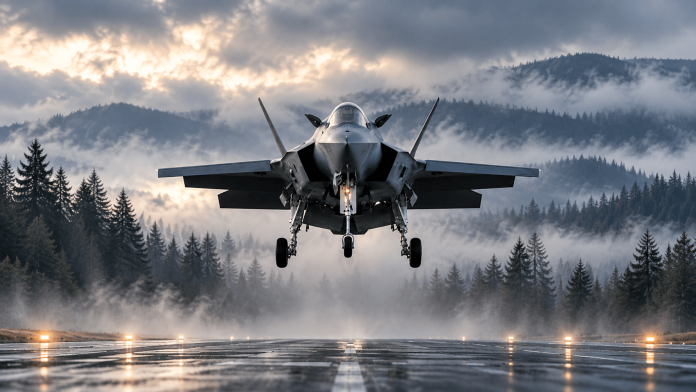
The F-35 production deal announced Thursday between Lockheed Martin and the Pentagon outlines plans to build at least 850 fighter jets for the U.S. military over the next decade. The agreement also includes international aircraft orders, replacement parts, upgrades, and long-term maintenance support. If approved by Congress, it would represent a major change in how the Pentagon purchases and supports its largest fighter aircraft program.
Announced October 22, 2026, the framework covers F-35 production Lots 21 through 30 and calls for Lockheed Martin to maintain output at approximately 156 aircraft annually. The company has also committed at least $7 billion of its own funding to support manufacturing improvements and the program’s supply chain. The agreement is not a finalized order for 850 aircraft. Congressional authorization and funding are still required, and the Pentagon and Lockheed Martin must negotiate final pricing and delivery schedules.
Why the Pentagon Is Changing How It Buys F-35s
The Pentagon has traditionally purchased F-35s through contracts covering relatively short production periods. That approach leaves manufacturers and suppliers planning expensive production work without knowing exactly how many aircraft the government will purchase several years down the road. The new framework would extend that planning period to ten years, allowing Lockheed Martin and its suppliers to make manufacturing decisions with greater confidence. For an aircraft program involving thousands of specialized components and an extensive international supplier network, that could make a substantial difference.
The Pentagon also expects the arrangement to reduce costs through larger purchasing commitments and more consistent pricing. Lockheed Martin has projected billions in savings, although those figures will depend on the contracts ultimately approved and the manufacturer’s ability to meet its production targets.
Lockheed Martin Commits $7 Billion to Manufacturing and Support
Under the proposed agreement, Lockheed Martin will invest at least $7 billion in initiatives supporting the F-35 program. The money is intended to improve production capacity, strengthen suppliers, and address maintenance and parts availability across the growing fleet. Those investments come as the F-35 program continues to face scrutiny over operating costs, aircraft readiness, and delays involving upgrades. Increasing production alone will not resolve those problems, particularly if spare parts and maintenance resources cannot keep pace with the number of aircraft entering service.
Lockheed Martin CEO Jim Taiclet said the agreement would give the company the certainty needed to invest in additional manufacturing capacity and improve efficiency. The company has not released a detailed breakdown of where the $7 billion will be spent or how much additional production capacity those investments could provide.
F-35 Production to Remain at 156 Aircraft Annually
Lockheed Martin plans to maintain production at approximately 156 F-35s per year, or roughly three aircraft per week. That figure includes aircraft for international customers and should not be confused with the 850 fighters identified for the U.S. military. The manufacturer is already supporting a substantial worldwide fleet. According to Lockheed Martin, more than 1,375 F-35s have been fielded globally, with the aircraft accumulating more than one million flight hours.
The agreement also includes ten years of modification kits and sustainment support. That is an important part of the arrangement because the Pentagon must continue maintaining and upgrading aircraft already in service while purchasing new ones.
The 850-Aircraft Agreement Still Needs Congressional Approval
Despite the scale of Thursday’s announcement, the Pentagon has not placed a binding order for all 850 aircraft. Congress must approve the necessary multiyear procurement authority and funding before the F-35 Joint Program Office and Lockheed Martin can finalize the contract. Aircraft pricing, delivery schedules, and other contractual details will be determined during those negotiations.
Neither party has announced a final contract value. Reuters estimates the aircraft portion could be worth at least $78 billion, but that is not an agreed contract price and does not establish the full cost of the proposed sustainment and support arrangements. The next major development will be whether Congress authorizes the long-term purchasing structure. Until then, the agreement establishes the Pentagon’s intended direction for F-35 procurement rather than guaranteeing the delivery of 850 additional fighter jets.